Showing posts with label History. Show all posts

Thursday, October 29, 2015

Mummy Brown and Other Historical Colors – Veritable Hokum


  Everything © Korwin Briggs
How did humanity discover how to make colors?

The quick answer is that we, even as cave-dwellers, ground up everything we could get our hands on. Comic creator of Veritable Hokum and historian Korwin Briggs recently assembled a chart that demonstrates the incredible millenniums-long process that resulted from that urge. Many of the paint colors that we take for granted today were actually difficult to come by for most of human history.
Often because the stuff we ground up to make colors was poisonous and kind of killed us!   - From Tor.com 
See the Infographic and read more:  


Tuesday, October 6, 2015

New clay tablet adds 20 lines to Epic of Gilgamesh

New clay tablet adds 20 lines to Epic of Gilgamesh


Newly discovered clay Tablet V of the Standard Babylonian Epic of Gilgamesh. in the Sulaymaniah Museum in the Kurdistan Region of Iraq has corrected the order of chapters, filled in blanks and added 20 lines to the Epic of Gilgamesh.


Read various versions of The Epic of Gilgamesh:
Project Gutenberg:
Audio Readings and books:
by Prince Frederick, MD Performed by George Guidall. 

Hear The Epic of Gilgamesh Read in its Original Ancient Language, Akkadian.  Standard Version, Tablet XI, lines 1-163, read by Karl Hecker


The University of London’s Department of the Languages and Cultures of the Ancient Near. Readings of Gilgamesh, The Epic of Anzu, the Codex Hammurabi and other Babylonian texts.

Cuneiform

Akkadian was a semitic language spoken in Mesopotamia (modern Iraq and Syria) between about 2,800 BC and 500 AD. It was named after the city of Akkad and first appeared in Sumerian texts dating from 2,800 BC in the form of Akkadian names. Read more on omniglot.com

Sumerian was spoken in Sumer in southern Mesopotamia (part of modern Iraq) from perhaps the 4th millennium BC until about 2,000 BC, when it was replaced by Akkadian as a spoken language, though continued to be used in writing for religious, artistic and scholarly purposes until about the 1st century AD. Sumerian is not related to any other known language so is classified as a language isolate. Read more on omniglot.com

Sunday, September 27, 2015

The Norse Mythology Blog: INTERVIEW WITH JENNIFER SNOOK (AMERICAN HEATHENS),...

The Norse Mythology Blog: INTERVIEW WITH JENNIFER SNOOK (AMERICAN HEATHENS),...: American Heathens by Jennifer Snook 

American Heathens: The Politics of Identity in a Pagan Religious MovementSociologist Jennifer Snook's groundbreaking new book,
American Heathens: The Politics of Identity in a Pagan Religious Movement


Description

American Heathens is the first in-depth ethnographic study about the largely misunderstood practice of American Heathenry (Germanic Paganism). Jennifer Snook—who has been Pagan since her early teens and a Heathen since eighteen—traces the development and trajectory of Heathenry as a new religious movement in America, one in which all identities are political and all politics matter.

Snook explores the complexities of pagan reconstruction and racial, ethnic and gender identity in today’s divisive political climate. She considers the impact of social media on Heathen collectivities, and offers a glimpse of the world of Heathen meanings, rituals, and philosophy.

In American Heathens, Snook presents the stories and perspectives of modern practitioners in engaging detail. She treats Heathens as members of a religious movement, rather than simply a subculture reenacting myths and stories of enchantment. Her book shrewdly addresses how people construct ethnicity in a reconstructionist (historically-minded) faith system with no central authority.

Tuesday, October 28, 2014

Shelf Inflicted: THE SWERVE: How the World Became ModernStephen G...

Shelf Inflicted:
THE SWERVE: How the World Became Modern   by Stephen Greenblatt
Reviewed by Richard, 5* of five...

I found the above review to be a  well written summary of how one example of a re-discovered poem from antiquity changed how we think today.

This review demonstrates how reading this book, and of reading the original poem De rerum natura by Lucretius to understand how the philosophy of the Humanists and the works of Epicurus are both important and relevant today.

Links:
The Swerve: How the World Became Modern

Monday, January 3, 2011

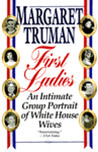
Book Review: First Ladies: An Intimate Group Portrait of White House Wives by Margaret Truman

First Ladies: An Intimate Group Portrait of White House WivesFirst Ladies: An Intimate Group Portrait of White House Wives by Margaret Truman
My rating: 4 of 5 stars

I really enjoyed this audio book, a fascinating and informative look at the role and history of the white house through the efforts and influences of the first ladies. This mostly ignored role in history has much to offer in understanding not just the politics but the people who have run this country.

View all my reviews